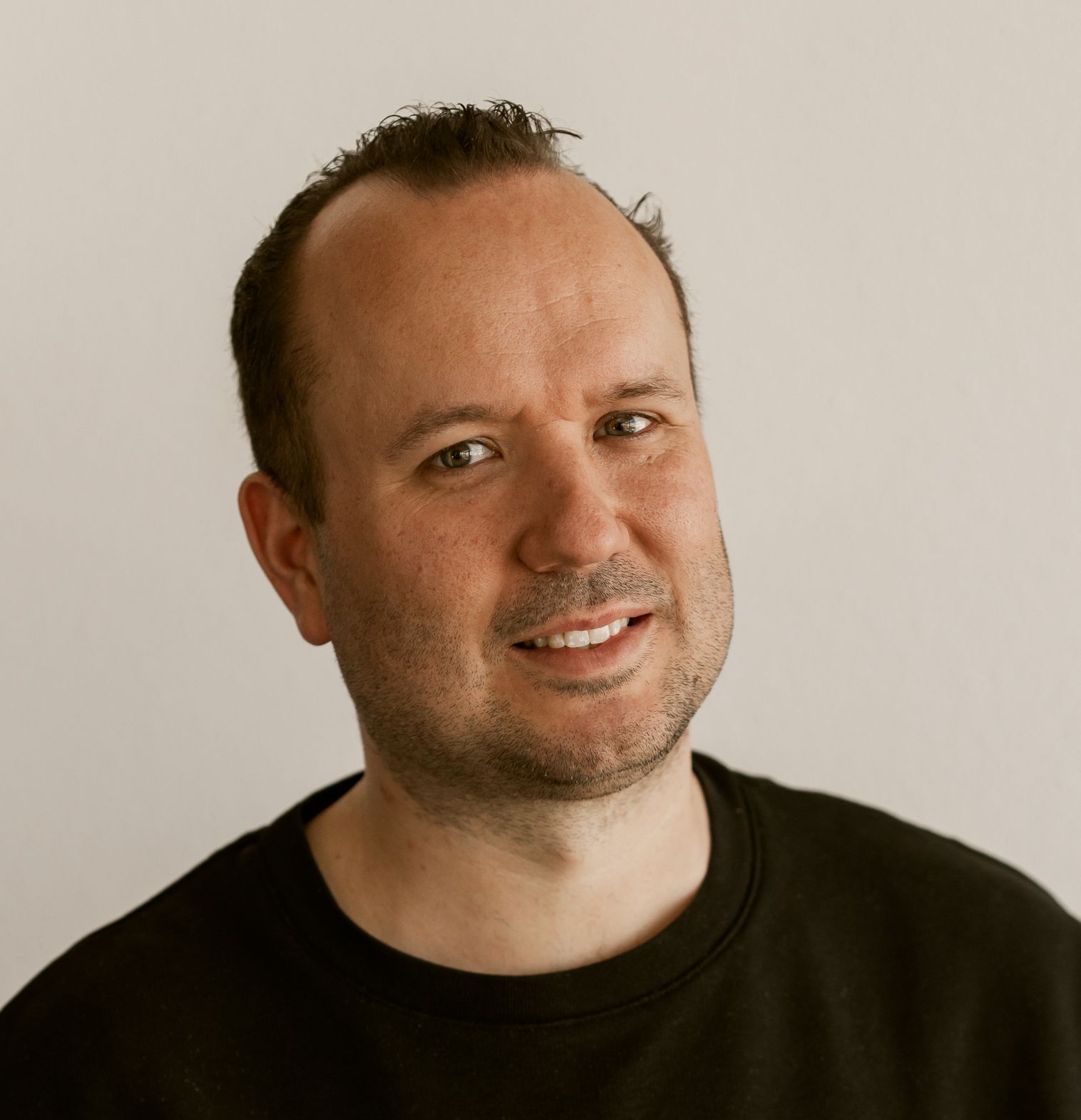
Sander de Vries
Business Director of Media Technology
1 May 2025, 7 min
NAB Show 2025: AI matures, boundaries blur
Reader's Note
In collaboration with Broadcast Magazine, our Business Director of Media Technology, Sander de Vries, shared his insights from the NAB Show Las Vegas 2025. Explore more at: https://www.broadcastmagazine.nl/.
Interview
AI matures, boundaries blur
The NAB Show, held April 5–9 in Las Vegas, gave us at Triple (part of Hypersolid) valuable insight into the latest developments in streaming and digital content distribution. We focused specifically on the Streaming Summit—which we also sponsored—and the exhibitors in the West Hall, where the future of our industry is taking shape.
Attendance was somewhat lower than in previous years, likely due to economic headwinds across the sector and the current geopolitical climate. Even so, the quality of the innovations and discussions was impressive, sending strong signals about where the streaming market is headed.
Once again, the focus was on effective cost savings and practical applications of AI, clear signs that the technology is evolving beyond last year’s hype. Artificial intelligence is now reaching a more mature phase, with innovative products entering the market and delivering real value.

Sander de Vries on site at the NAB Show

Despite a smaller crowd, the event delivered strong innovations and valuable insights
Dolby OptiView
Dolby introduced OptiView, an integrated suite combining streaming, playback, and advertising tools into a single platform. OptiView is aimed at live sports and entertainment, featuring low-latency streaming and server-guided ad insertion (SGAI).
It enables streaming services to deliver high-quality live experiences with editorial tools like dynamic overlays, real-time multiview, and customizable broadcast graphics. A key advantage is the full integration of the Dolby ecosystem—from Dolby Vision for stunning visuals to Dolby Atmos for immersive sound. These technologies now work seamlessly across the entire media workflow, from content production and broadcasting to final playback in viewers’ homes. It’s a true end-to-end solution that ensures the creator’s original vision is preserved all the way to the end screen.
NETINT: a revolution in encoding
During their keynote at Dan Rayburn’s Streaming Summit, NETINT presented their VPU-based cards, including the T408 and Quadra lines. These hardware solutions deliver impressive AV1 and HEVC performance with significantly lower power consumption and rack space compared to traditional CPU or GPU setups.
By offloading heavy video processing to dedicated hardware, companies can cut costs by up to 80% while reducing energy use, freeing up compute power, and simplifying infrastructure. This approach is gaining traction - Akamai recently adopted it, and the compatible software ecosystem continues to grow.
I’m curious to see how established players like Harmonic, Ateme, and Synamedia respond. In today’s economy, where streaming businesses face mounting pressure to optimize operations, this level of cost-efficiency could be a game-changer.
Vibecoding + AI in media technology
AI-assisted development is fundamentally reshaping how we build software. With tools that generate code based on natural language, time-to-market shrinks from months to days, or even hours.
And it’s not just developers who benefit: non-tech users can now express their ideas in plain language, and AI turns that into working code. This democratization of software development empowers people without a technical background to bring their creative visions to life, breaking down the traditional barriers of coding.
At the Streaming Summit, Hypersolid (Triple) delivered an impressive demonstration focused on metadata enrichment.
The demo revealed how we developed a production-grade application in just a few weeks, a process that would traditionally take much longer. Most striking was how seamlessly the application integrated into an existing media workflow, specifically for content annotation. A perfect illustration of how AI-assisted development can dramatically reduce time to market.

Smarter ad models
With ad-supported SVOD models gaining ground—think Videoland in the Netherlands, Netflix rolling it out in multiple markets, and Viaplay recently jumping in with some controversy—the tech behind these models is evolving fast.
Viewers are increasingly fatigued by disruptive, irrelevant ads. Server-Guided Ad Insertion (SGAI) is emerging as a solution, offering smarter, less intrusive ad delivery. SGAI gives publishers greater control within the stream itself, enabling innovations like mid-roll overlays, dynamic sponsor swaps, and subtle editorial tweaks, all without interrupting the viewer experience with traditional ad breaks.
Various players are tackling this from different angles—some from a video player background, others from ad tech or transcoding—but they all share a common goal: delivering more engaging, less disruptive, and still highly profitable content.
The line between traditional broadcasters and digital content creators is fading fast. At the NAB Show, we saw clear signs of cross-pollination between what were once entirely separate worlds.
Converge of content production and distribution
The media landscape is undergoing a fundamental transformation: the previously separate worlds of content production and distribution are rapidly merging. Server-guided ad insertion (SGAI), originally developed for advertising purposes, is now proving to be a valuable tool for image editors and directors making editorial adjustments.
At the same time, we see software developers integrating their solutions into established systems like EVS and Grass Valley. This trend is only set to accelerate.
While the media and entertainment industry remains an inspiring place to work, it is undeniably at the forefront of the disruption curve. The ongoing consolidation and technological acceleration will continue to reshape the landscape, presenting both new challenges and opportunities for all players in the sector.
Connecting with audiences
Influencers and digital creators have built global reach by operating nimbly, authentically, and platform-specifically. Their strength lies in direct audience connection, rapid content creation, and the ability to jump on trends immediately. Traditional media companies are studying these methods to enhance their digital presence and engage younger audiences.
At the same time, creators are moving toward more structured business models long used by broadcasters - investing in production teams, content planning, and diversified revenue streams beyond just advertising. Many successful creators are even building their own platforms to reduce dependency on social channels.
What both sides have in common is a focus on reach and affordability. Whether traditional broadcasters or independent creators, everyone is looking for cost-effective ways to produce quality content that maximizes audience. The shared challenge remains: finding sustainable business models in an increasingly competitive media landscape.


Cloud tools
Another key trend at NAB was the ongoing evolution of content creation. Workflows that once required physical infrastructure (like MCRs and OBVs) are now possible with browser-based, cloud-native tools.
A great example is MXMZ Media (a spin-off from Southfields, part of Banijay), which offers easy-to-use, web-based tools for live graphics. Their accessible platform empowers production teams to add professional visuals to livestreams - no complex hardware or specialist knowledge needed. It’s an affordable solution that democratizes capabilities once reserved for major broadcasters with deep technical resources.
This shift to cloud-based tooling makes remote collaboration more efficient and lowers the barrier to high-quality live production. It dovetails perfectly with broader industry moves toward cloud management and post-production.
Streaming Summit
A major part of NAB was the Streaming Summit, hosted by streaming media veteran Dan Rayburn. This two-day event in the West Hall featured over 85 speakers across multiple tracks, covering topics like OTT monetization strategies, AI integration in video workflows, content bundling, sports streaming, and optimizing user experiences.
We also took the stage with a session on building AI-powered media apps. Hypersolid’s James Milton spoke about finding the balance between automation and editorial control to create smart, scalable workflows and how to build these tools yourself.
After five days at NAB, I came back with mixed feelings. The economic challenges were visible in lower attendance, but there’s a genuine drive for innovation that makes me feel optimistic about where our industry is heading.
Most striking was how much the boundaries are blurring: between creators and broadcasters, production and distribution, linear and on-demand. This convergence is opening up new opportunities for agile companies.
At Triple/Hypersolid, we’re right at that intersection. With one foot in traditional media and the other in tech and AI, we’re building bridges. The conversations and connections at NAB confirmed that our strategy of hybrid solutions is the right path forward.
The media world keeps evolving, but one thing remains constant: the need for meaningful content that connects people. Technology is just the means, not the goal. The future of media will be shaped by how we, as professionals, use these tools to tell the stories that matter.
Connected TV World Summit: the transformation of linear viewing
About a month ahead of the NAB show, the Triple/Hypersolid team also made an appearance at the Connected TV World Summit. What stood out the most? The striking prediction is that Connected TV will overtake traditional linear television globally as early as 2029.
Sounds far-fetched? Maybe. But just look around - nearly every Dutch household now boasts a smart TV in the living room, often more than one spread throughout the home.
Whether the Netherlands will shift just as quickly as other countries remains to be seen, but the signs are undeniable. Traditional TV viewing is undergoing a metamorphosis. Young audiences barely know the concept of “channel surfing”, and they consume content through apps, not channels. The digital revolution in our living rooms isn’t some distant vision of the future - it’s already charging ahead, powered by algorithms that know what we want to watch better than we do.
Meanwhile, FAST (Free Ad-Supported Television) is already making waves in the United States, though it’s only just starting to gain a foothold in the Netherlands. The interesting twist? FAST is basically linear TV reborn—with full channels and scheduled programming, only streamed online and funded by ads.
A hint of hope
There’s a certain irony in the fact that while some declare the end of linear TV, FAST is reinventing that familiar experience for the digital age. Perhaps that craving for a familiar structure signals there’s still hope for traditional TV habits.
Despite the abundance of on-demand options, viewers still value that relaxed, lean-back experience, letting someone else do the programming.
And let’s not forget: live TV and sports will always hold a key place in the media landscape. There’s a reason streaming giants like Netflix, Videoland, and Viaplay are doubling down on sports and live entertainment. The shared thrill of watching a match or major live event in real time is irreplaceable, even in a world built on personal content curation. It’s that sense of collective experience - knowing millions of others are watching the same thing at the same time - that streamers are now trying to capture.
Rather than disappearing, linear viewing seems to be evolving.
The future of TV might not be endless scrolling through menus, but a new wave of digital-first channels that curate for you.
A familiar friend, wrapped in a modern, digital coat. It won’t be either/or, it’ll be a blend. And a fascinating one at that.
Solid change starts here
Perspectives
The latest insights into the future by the people developing it

AI Media Carwash: Getting more value from the same content
7 minutes
Key takeaways from CTV World Summit 2025
4 minutes
Transforming connected TV into an enhanced experience
4 minutes