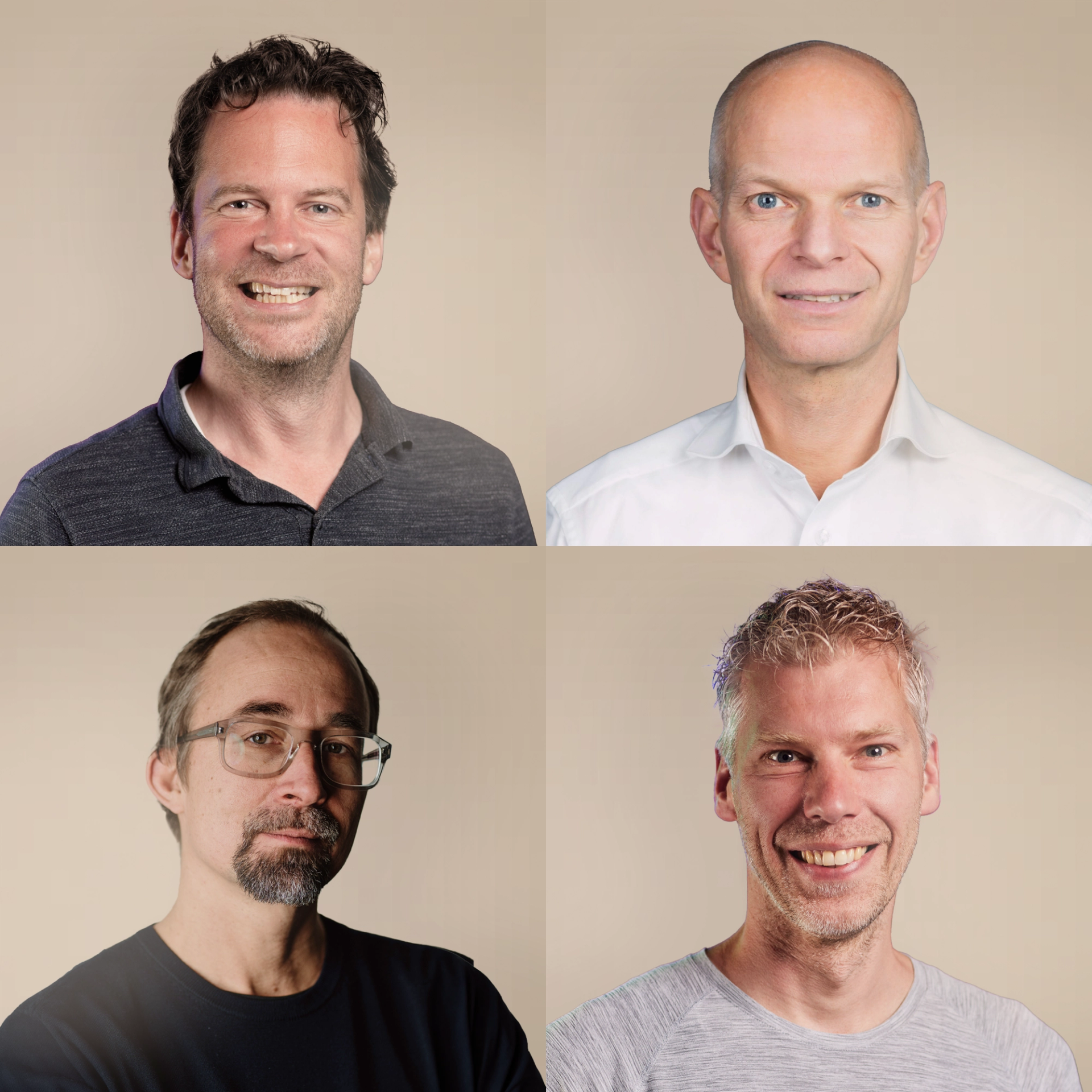
Rikkert van Bergen, Marco van Veen, David Vogel & Pieter Dubelaar
Architects
18 Nov 2024, 10 min
Maximizing business impact by unlocking synergy between global ambitions and local tech needs

Introduction
The challenge: Staying competitive while balancing global and local priorities
Multinational organizations often operate in complex technical environments, in which they have to balance the needs of a global headquarters with those of local operating companies (OpCos).
Although each operating company has to align with global priorities, they must also meet unique market demands, regulatory requirements and technological standards to remain competitive within their own market. A possible complicating fact might be that OpCos often have their own legacy systems, as many OpCos were once independent organizations before being incorporated into the larger conglomerate.
Many organizations address this by implementing a mix of centralized systems and local workarounds. These can be effective but often lack cohesion, which can lead to data silos, duplicated efforts and misaligned brand experiences across markets. This unfortunately impacts the potential of the local business efforts.
As Hypersolid, we believe there are more efficient and beneficial ways to balance the global and local needs in a multinational tech landscape. We also believe these ways give global teams the consistency and control they need, simultaneously empowering local teams to adapt and innovate in their markets.
We advocate an approach in which we base our solutions on integrated systems that align diverse technical environments with clear business goals. This integrated approach allows us to help multinationals create a clear path to scalable growth and efficient operations across all OpCos, which will inevitably result in a higher business impact.
Key challenges to tackle
To achieve a successful integrated solution, there are several key challenges to address. These challenges touch upon both the technical framework as well as the brand experience.
In our definition of an integrated approach, tech and creativity are very closely intertwined, as we believe that great creativity and brand experience should always be rooted in a robust tech stack and data landscape.
Challenge: Fragmented technical stacks
In a situation without an integrated solution architecture, the different OpCos will most likely turn to local tech vendors due to costs, flexibility & autonomy, language and time zones. This can potentially lead to an array of incompatible software stacks for the different markets.
This decentralization in technology will unfortunately hamper cross-functional collaboration, complicate data integration and undermine a consistent tech infrastructure.
Moreover, having different software stacks also makes it very complicated to develop a centralized and uniform brand and user experience for the different OpCos, as these are perfect ingredients for inconsistencies in design, functionality, and overall user engagement across platforms.
Challenge: Inconsistent branding and user experience (UX)
As stated in the previous point; divergent systems and vendor relationships have the potential to result in different OpCos turning to local tech vendors. On top of undermining a consistent tech infrastructure, this can also lead to inconsistent branding and customer experiences.
This issue typically arises in decentralized organizations where regional branches manage their own systems. For instance, a global sportswear brand may create a cohesive brand at HQ, but regional branches are allowed to use inconsistent visual assets or brand elements that confuse customers and weaken brand loyalty.
These design inconsistencies will dilute brand identity. Standardizing UX components for each OpCo can address this potential issue.
Challenge: Data silos
As stated before; data–and moreover high-quality data–is the fuel which drives a successful CRM strategy.
The presence of fragmented systems, tools, and databases often leads to OpCos operating within isolated data silos, resulting in fragmented data structures.
This fragmented data structure undermines a unified customer view and hinders data-driven insights at a global level.
For example, one of our clients, a global FMCG had a fragmented B2B commerce landscape which led to an inconsistent data stream from their different OpCos an isolated data silos per OpCo.
We worked with them on creating a uniform data structure through implementing an AI solution for their OpCos, turning the isolated data silo into one integrated data silo on a global level.
This helped our customer in gaining valuable insights from all markets, resulting in a more detailed and consolidated view on their global customer behavior.

Challenge: Budget disparities and scalability issues
At Hypersolid, we are very focused on creating business impact for our partners. For us, creating business impact is a double-edged sword. Our solutions are always centered around cost-efficient solutions within the technical structure of our partners, which frees up budget for customer centric solutions.
In a multinational organization, large OpCos usually have the budgets and technical teams to innovate, while smaller ones lack resources for digital transformation.
This creates uneven digital maturity across the organization, disrupting a unified brand experience and limiting shared insights.
Working from a centralized technical framework creates scalable solutions for all OpCos within the organization, while still giving each OpCo the flexibility they need for their specific market.
Challenge: Regulatory compliance
Each OpCo must meet the regulatory standards of its local environment, complicating a unified system. For example, in a financial services organization, GDPR compliance might be a high priority for European offices, while data localization laws take precedence in other regions.
Hypersolid’s solution: A three step approach
All of the technical, creative and financial challenges a multinational organization faces, impede the operational efficiency, data accuracy and brand coherence they need to remain competitive.
While a centralized approach can address many of these issues, it's crucial to consider regional requirements and operational maturity. A tailored balance of global oversight and local adaptability is often the key to sustainable, cohesive growth across diverse markets.
Based on our experience and expertise working with multinational clients, Hypersolid advocates a three-part approach encompassing business building, technical implementation and brand design. Our focus is on creating integrate solutions that are adaptable, scalable and effective across all operational levels.
01
Using Pace Layered Transformation – an adaptable approach for creating maximum business impact with global-local synergy
At Hypersolid, we always aim to create business impact for our partners. As a result, our process is designed to harmonize the brand’s global objectives for consistency with each OpCo’s need for local adaptability and customer-centric innovations.
Through our phased approach—Discover, Define, Design, Scale—Hypersolid enables a brand’s global function to balance foundational consistency with differentiated, executional freedom at country or OpCo level.
Our solutions are always aimed at creating a solid and robust technical foundation, which allows for evolution and experimentation in brand, UX and AI.
Our methodology draws on our Pace Layered Transformation model—an evolved version of Gartner's original technology framework, updated to produce an integrated approach between technology and design.
Foundational layer
This primary layer encompasses core elements that remain consistent across all OpCos.
From a technological point of view, foundational technologies, such as data management platforms, cloud hosting, and digital commerce platforms form the backbone of a unified tech ecosystem.
From a UX and brand experience point of view, brand principles, design guidelines, and service blueprints ensure that each OpCo upholds essential brand standards. For example, all OpCos follow the same brand principles and foundational KPIs, maintaining a cohesive customer experience and upholding the global brand identity.
This approach can also apply to companies serving multiple brands, where consistent tech stacks and user interfaces across OpCos are essential to deliver a uniform digital experience, even if brand identities differ.

Pace Layered Transformation model
Evolutional layer
Having this foundational layer in place gives room to the evolution layer. This layer creates flexibility for OpCos to adapt and differentiate their approaches within structured parameters.
Evolutionary components, such as content management systems (CMS), customer relationship management (CRM), and design systems, enable regional or local teams to tailor campaigns to their market needs.
For instance, a global telco might allow OpCos to localize individual brands with their own digital ecosystem and local functionality, ensuring that global capabilities are made available in a tailored way across diverse markets.
Experimentation layer
In this final layer, OpCos gain the possibility to innovate and adapt based on local insights while remaining aligned with global objectives.
Experimentation includes sandbox environments, rapid prototyping, and data-driven marketing initiatives to enable agile responses to regional trends or unique market demands.
This layer empowers larger OpCos to execute high-impact local campaigns or implement experimental features, such as new digital experiences or region-specific product launches, to connect more deeply with local audiences.
We are firm believers that our Pace Layered Transformation model ensures all OpCos operate under a unified system while simultaneously allowing them to differentiate and innovate in ways that enhance local relevance.
Having a clear technical and creative framework in place, ensures that this freedom will always happen within the global standards. And although this experimentation layer gives a lot of possibilities to differentiate for OpCos, our approach also ensures that change management is integrated at every phase, giving the global operation insight into all planned experimentation.
02
Technical implementation: a flexible architecture for seamless integration
Our technical implementation method provides multinational organizations with a robust yet adaptable tech stack, ensuring consistency while also allowing for innovation across OpCos.
Hypersolid’s emphasis on best-of-breed integration and MACH architecture (Microservices, API-first, Cloud-native and Headless) enables us to create scalable, modular systems that balance centralized governance with localized agility.
Best-of-breed integration
Best-of-breed integration Hypersolid’s architecture enables OpCos to choose the best tools for their specific needs without compromising compatibility.
For instance, while global HQ may use a central CRM system, local OpCos can integrate their preferred CRM tools using a central microservices-based application and data integration layer, achieving seamless data integration.
This flexibility also allows OpCos to be first movers and adopt innovative local solutions quickly as market needs evolve.
Security and compliance embedded in architecture
Ensuring compliance across global regions is essential for security and regulatory adherence. Our frameworks incorporate global data security and privacy standards, with parameters for local adaptations.
For example, European offices comply with GDPR standards, while OpCos in countries with data localization laws store information locally within the shared global system. Hypersolid’s layered security architecture maintains compliance across OpCos without compromising performance or user experience.
By using a best-of-breed, microservices-based approach, Hypersolid enables global companies to integrate disparate systems, achieve cross-functional compatibility and scale flexibly. Our architecture ensures that each OpCo operates within a unified framework while retaining the agility needed to serve local markets.
03
Brand: modular systems for consistent yet adaptable UX
While our robust technical framework allows for adaptable layers within a multinational organization, our modular design systems setup establishes a similar effect for our creative solutions.
In our view brand design plays a pivotal role in achieving global coherence while keeping local relevancy. Hypersolid’s design strategy addresses the specific need for a consistent user experience across all markets, while allowing each OpCo to reflect local nuances or even operate under its own brand, in the case of multi-brand conglomerates.
Our process emphasizes modularity through componentized design systems, which create reusable, customizable elements that empower local teams to easily build tailored experiences without deviating from global objectives.
Vision and strategy development
To align global and local stakeholders, we initiate projects with vision work. Through workshops and concept prototypes, Hypersolid builds a shared vision for user experience.
For example, for a global consumer electronics company we brought their blended D2C and retail strategy to life in a vision film that communicated the future of the customer experience to an internal audience. But we also assisted in setting down the strategy and operational requirements to make this a reality.
This vision work reveals how tailored yet cohesive design can be deployed across markets, setting a shared standard.
Componentized design systems
Hypersolid designs modular systems that can scale across diverse markets. Through design tokens and UI components, we ensure consistent brand elements—colors, fonts, layouts—are easily adaptable across multiple platforms.
For example, implementing right-to-left (RTL) adjustments for Arabic-speaking markets is seamless with our tokenized design system, ensuring each market’s unique user needs are addressed within a unified brand experience.
Dynamic turn-on/off features for local adaptation
Our brand design approach includes feature toggles that allow OpCos to activate or deactivate tools and features based on local relevance. For instance, a CRM feature for loyalty programs can be turned on in regions where customer retention is crucial while remaining inactive in markets focused on new customer acquisition.
This design flexibility meets local expectations without complicating the core infrastructure.
Our approach to design ensures that each OpCo maintains the brand’s integrity while creating meaningful connections with local audiences. This enables faster time-to-market for new features and campaigns, as standardized components are repurposed across OpCos, minimizing redundant work.
Achieving strategic alignment for global growth
Hypersolid’s Paced Layered transformation model, MACH-based technical implementation and modular design system together deliver a comprehensive solution that enables multinational organizations to maintain consistent branding, operational efficiency and regulatory compliance across all OpCos.
As a result, our integrated approach fosters local autonomy, enabling OpCos to adapt and innovate within their unique markets, therefore maximizing the overall business impact.
We believe our strategy empowers companies to bridge the gap between central governance and regional agility, reducing inefficiencies, unlocking synergies and increasing speed-to-market for new features, updates and campaigns.
For instance, a financial services client operating in diverse regulatory environments can maintain a consistent data security standard globally while adjusting privacy measures for specific markets as regulations change. This alignment minimizes redundant work, reduces design and technical debt, and fosters collaboration across the organization.
By partnering with Hypersolid, enterprises gain the technical and organizational support needed to stay competitive in dynamic global markets. Our solution’s adaptability sets the stage for sustained, scalable growth, aligning global priorities with local demands in a seamless, integrated ecosystem.
Perspectives
Industry insights, company updates, and groundbreaking achievements. Stories that drive Hypersolid forward.

